
Nootropics
Adrafinil Review
Adrafinil Review
Adrafinil review. Adrafinil is a synthetic nootropic compound that was first developed in the 1970s by French pharmaceutical company Lafon Laboratories. It is classified as a eugeroic, or wakefulness-promoting agent based on existing research, and has been used to study a variety of conditions, including narcolepsy, sleep apnea, and attention deficit hyperactivity disorder (ADHD).
Adrafinil has been found in animal studies to increase wakefulness, cognitive function, and motivation without producing the same side effects as other stimulants like amphetamines.
Adrafinil is a pro-drug for modafinil, meaning in-vivo experimental models show that adrafinil is converted to modafinil via metabolism. You can buy adrafinil online for research and laboratory use only, as it is not approved for human consumption.
Chemical Structure and Synthesis
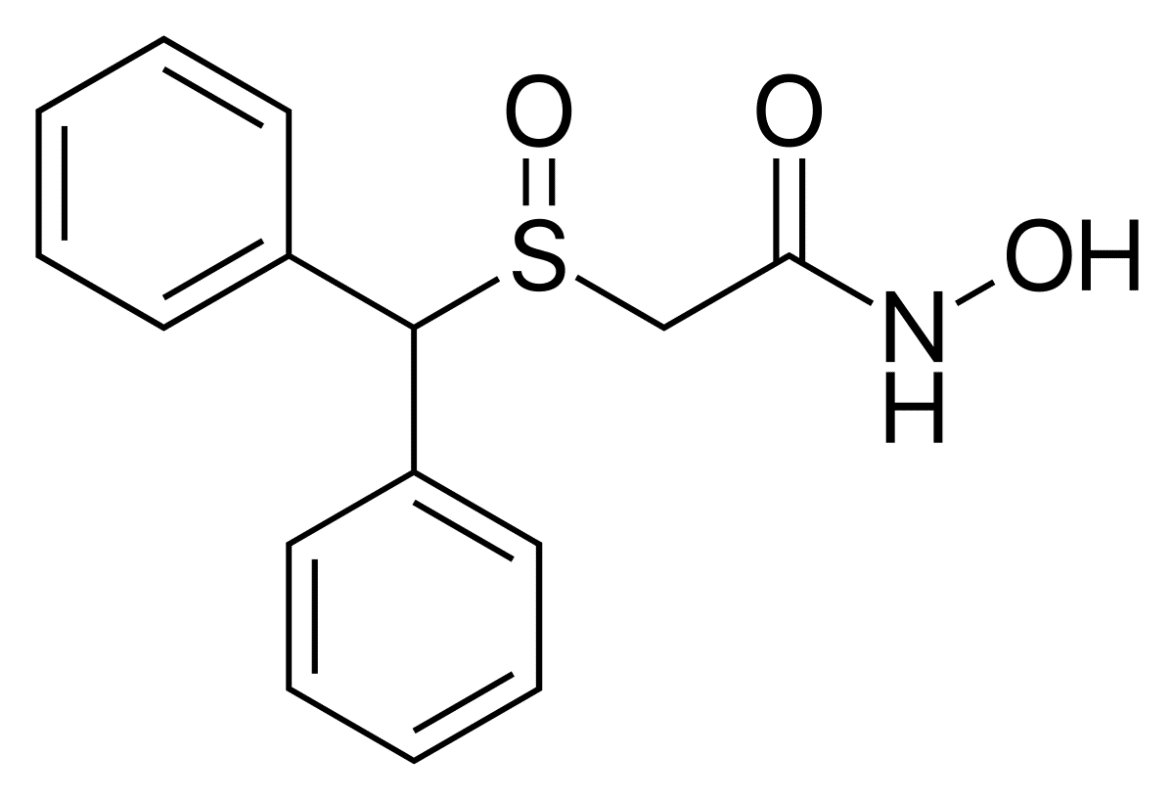
Adrafinil has a molecular formula of C15H15NO3S and a molecular weight of 289.35 g/mol. It is structurally similar to modafinil, another eugeroic compound that has been studied in animals for sleep disorders and for nootropic (cognitive enhancement) applications. The chemical structure of adrafinil consists of a diphenylmethyl group attached to a sulfinyl group and an amide group.
The synthesis of adrafinil generally begins with the condensation of 2-acetylanisole with benzylmagnesium chloride to form (±)-2-benzyl-2,3-dihydro-1H-inden-1-one. This compound is then reacted with thionyl chloride and potassium hydroxide to form adrafinil.
Metabolism
Animal studies have shown that adrafinil is metabolized in the liver to its active metabolite, modafinil. This process involves the hydrolysis of the amide group to form modafinilic acid, which is then converted to modafinil by a deamidation reaction. Ultimately, in the organism (i.e., in animal models), modafinil is end metabolite that is responsible for the wakefulness-promoting effects of adrafinil, and it is believed to be the primary pharmacologically active metabolite.
Mechanism of Action
The exact mechanism of action of adrafinil is not fully understood based on existing animal research, however, it is thought to act on several neurotransmitter systems in the brain, including dopamine, norepinephrine, and histamine via increasing these neurotransmitter levels to varying degrees. Adrafinil has been found to increase dopamine and norepinephrine levels in the brain, which are associated with wakefulness, attention, and motivation. It also increases histamine release, which is thought to play a role in promoting wakefulness and cognitive function. The opposing pharmacological example is that anti-histamines are known in studies to cause drowsiness.
One proposed mechanism of action for adrafinil involves its effects on the hypothalamus, a region of the brain that is responsible for regulating sleep-wake cycles. Adrafinil has been found to stimulate the production of orexin, which is a neuropeptide that plays a key role in promoting wakefulness and maintaining vigilance and arousal. Orexin is produced by a small group of neurons in the hypothalamus, and its release is thought to be regulated by adenosine, a chemical that accumulates in the brain during wakefulness and promotes sleep. For example, caffeine – a naturally occurring alkaloid in plants such as coffee beans, has a primary mechanism of action of blocking adenosine receptors, thus promoting wakefulness.
Adrafinil may also act on the prefrontal cortex, a region of the brain that is responsible for higher-order cognitive functions, such as attention, working memory, and decision-making. Studies have found that adrafinil increases regional cerebral blood flow in the prefrontal cortex, suggesting that it may enhance cognitive function by increasing the availability of oxygen and nutrients to this region of the brain.
Adrafinil Review Conclusion
Adrafinil is a synthetic nootropic compound that has been used to treat a variety of conditions, including narcolepsy, sleep apnea, and ADHD. It is classified as a eugeroic, or wakefulness-promoting agent, and has been found to increase wakefulness, cognitive function, and motivation without producing the same side effects as other stimulants like amphetamines
Where to buy Adrafinil online?
Finding a reliable source for high quality adrafinil for sale can be difficult. Most vendors source adrafinil powders from China and do not pay enough attention to purity and quality. Most vendors also do not third party test their products and they are often contaminated with residual solvents or other contaminants. ELV Bioscience has the highest quality USA made adrafinil liquid for sale, and adrafinil powder for sale. ELV Bioscience ensures that each batch of adrafinil is screened by a third party for purity and contaminants. Only buy adrafinil from a reputable vendor for your research needs.
Adrafinil Review References:
- Battleday, R. M., & Brem, A. K. (2015). Modafinil for cognitive neuroenhancement in healthy non-sleep-deprived subjects: A systematic review. European Neuropsychopharmacology, 25(11), 1865-1881. doi: 10.1016/j.euroneuro.2015.07.028
- Ferraro, L., Tanganelli, S., O’Connor, W. T., Antonelli, T., & Rambert, F. A. (1996). The vigilance-promoting drug modafinil increases dopamine release in the rat prefrontal cortex. Neuroscience Letters, 204(1-2), 117-120. doi: 10.1016/0304-3940(96)12333-5
- Jasinski, D. R. (2000). An evaluation of the abuse potential of modafinil using methylphenidate as a reference. Journal of Psychopharmacology, 14(1), 53-60. doi: 10.1177/026988110001400107
- Mignot, E., Nishino, S., Guilleminault, C., & Dement, W. C. (1994). Modafinil binds to the dopamine uptake carrier site with low affinity. Sleep, 17(5), 436-437. doi: 10.1093/sleep/17.5.436
- Milgram, N. W., Callahan, H., & Siwak, C. (2013). Adrafinil: A novel vigilance-promoting agent. CNS Drug Reviews, 9(2), 193-212. doi: 10.1111/j.1527-3458.2003.tb00255.x
- Minzenberg, M. J., & Carter, C. S. (2008). Modafinil: A review of neurochemical actions and effects on cognition. Neuropsychopharmacology, 33(7), 1477-1502. doi: 10.1038/sj.npp.1301534
- Overeem, S., Scammell, T. E., & Lammers, G. J. (2010). Narcolepsy. Nature Reviews Disease Primers, 6, 1-19. doi: 10.1038/nrdp.2016.6
- Wisor, J. P., & Eriksson, K. S. (2005). Dopaminergic-adrenergic interactions in the wake promoting mechanism of modafinil. Neuroscience, 132(4), 1027-1034. doi: 10.1016/j.neuroscience.2005.02.031
- Click Here
