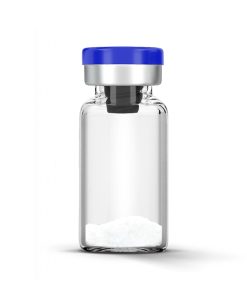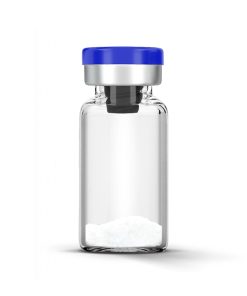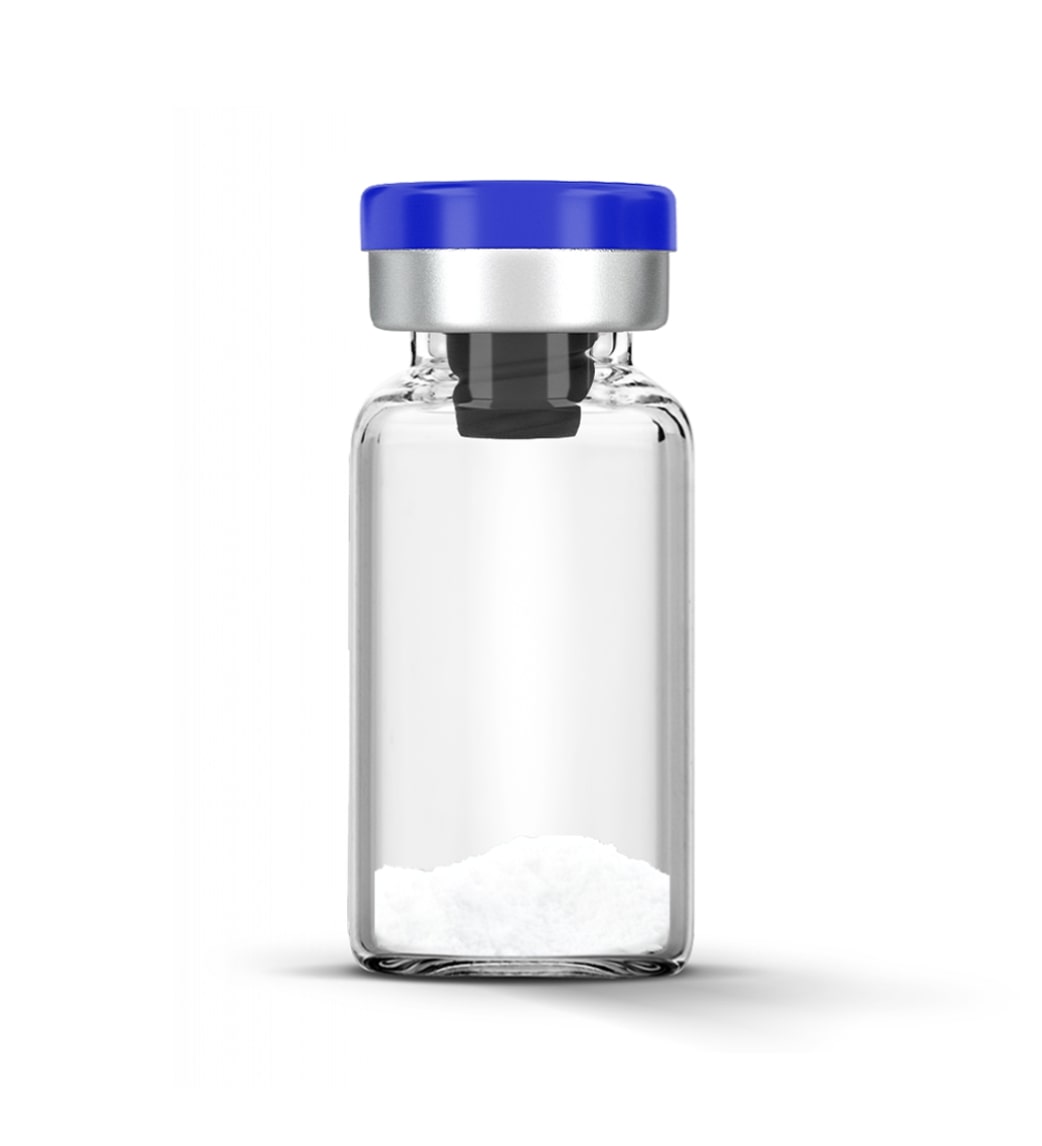
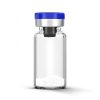
CAGRILINTIDE | 5MG
Original price was: $150.00.$125.00Current price is: $125.00.
5mg/Vial.
DOES NOT QUALIFY FOR FREE PRODUCT PROMOTIONS DUE TO LIMITED SUPPLY.
LIMITED STOCK.
Do not wait to place your order, as new inventory will be allocated to orders on a first-come first-serve basis.
BUY CAGRILINTIDE.
5mg/Vial.
- 3rd Party Tested.
- Tamper-Proof Seal.
- Free Shipping on Orders Over $149.
Buy Cagrilintide. [>99.8% Purity].
Technical Description of Cagrilintide Peptide for Animal Research
Cagrilintide is a long-acting analog of the naturally occurring peptide amylin, designed to act as an amylin receptor agonist. Amylin, a hormone co-secreted with insulin by pancreatic β-cells, plays an essential role in regulating satiety, food intake, and glucose homeostasis. Cagrilintide is engineered to enhance these regulatory functions, making it a potent candidate for studying metabolic control, appetite regulation, and weight management in animal research. By mimicking amylin’s physiological actions, cagrilintide allows researchers to explore the complex neuroendocrine pathways involved in appetite suppression, energy homeostasis, and glucose regulation in various animal models.
Cagrilintide’s mechanism of action centers around its activation of amylin receptors, which are predominantly expressed in the brain’s areas responsible for appetite and metabolic control, such as the area postrema and the nucleus of the solitary tract. Its long half-life and sustained biological activity make it an important compound for extended studies on metabolism, weight loss, and satiety regulation.
Structure and Mechanism of Action
Cagrilintide is a synthetic peptide analog of human amylin, with structural modifications designed to extend its half-life and improve its stability compared to the native peptide. Amylin itself is a 37-amino acid peptide, and while it is structurally similar to calcitonin, it has distinct metabolic effects. Cagrilintide retains the functional properties of native amylin but resists enzymatic degradation, allowing it to maintain longer-lasting effects after administration.
The primary mechanism of action for cagrilintide involves binding to amylin receptors in the brain and peripheral tissues, leading to increased satiety, decreased food intake, and slowed gastric emptying. These effects make cagrilintide a useful peptide for studying energy balance and glucose metabolism in animal models of obesity, diabetes, and related metabolic disorders.
Amylin receptor activation by cagrilintide triggers signaling pathways that suppress appetite, reduce caloric intake, and modulate glucose levels. This peptide’s role in appetite control and glucose regulation is central to its research applications, allowing scientists to investigate its potential benefits in reducing body weight and improving metabolic parameters in various species.
Cagrilintide in Animal Research
Cagrilintide has been utilized in a range of animal studies to investigate its effects on body weight, satiety, and glucose metabolism. Animal models of obesity, diabetes, and metabolic dysfunction have provided valuable insights into how cagrilintide influences metabolic processes. Below are key areas of research where cagrilintide has been studied.
1. Effects on Body Weight and Appetite Regulation
Cagrilintide’s ability to reduce food intake and promote satiety has made it a focus of research in animal models of obesity. Given its amylin receptor agonist activity, cagrilintide effectively decreases caloric intake and leads to sustained weight loss in animals.
In rodent models, cagrilintide administration resulted in a significant reduction in food consumption, leading to marked reductions in body weight over time. For example, one study in diet-induced obese (DIO) rats showed that treatment with cagrilintide decreased body weight by over 20% within a few weeks of administration. These effects were directly linked to the peptide’s appetite-suppressing properties and its ability to delay gastric emptying, making animals feel fuller for longer periods.
In larger animals, such as non-human primates, cagrilintide demonstrated similar effects, with animals experiencing significant reductions in body weight and improvements in overall body composition. These findings highlight the potential of cagrilintide in studying long-term appetite control and weight management in various species.
2. Glucose Homeostasis and Insulin Sensitivity
Cagrilintide’s role in glucose regulation is another critical area of research in animal studies. Amylin, alongside insulin, plays an essential role in maintaining glucose homeostasis, particularly after meals. By slowing gastric emptying, cagrilintide helps reduce the rate of glucose absorption, leading to smoother postprandial glucose responses. This makes it particularly relevant in studies focused on diabetes and insulin resistance.
In diabetic rodent models, cagrilintide has been shown to improve glucose tolerance and enhance insulin sensitivity. For example, one study demonstrated that cagrilintide-treated diabetic rats exhibited lower postprandial glucose levels and reduced insulin requirements compared to control animals. The peptide’s ability to modulate glucose levels is attributed to its effects on delaying nutrient absorption and reducing glucagon secretion.
Furthermore, cagrilintide’s effects on insulin sensitivity have been explored in research involving insulin-resistant animals. Studies have shown that cagrilintide can improve insulin action in peripheral tissues, particularly in muscle and liver, leading to better glucose uptake and reduced hepatic glucose production.
3. Energy Homeostasis and Fat Metabolism
Research on cagrilintide has also focused on its effects on energy expenditure and fat metabolism. In animal models, cagrilintide not only decreases food intake but also helps modulate energy balance by enhancing fat oxidation and reducing fat storage. This dual action is crucial in the context of obesity research, where excess fat accumulation and decreased energy expenditure contribute to metabolic dysfunction.
In one study involving obese rodents, cagrilintide administration led to a significant reduction in fat mass, particularly in visceral fat deposits, while sparing lean muscle mass. The reduction in fat stores was linked to an increase in lipid oxidation, as measured by respiratory exchange ratio (RER) data, indicating a shift toward fat utilization for energy.
In non-human primate models, cagrilintide treatment resulted in similar reductions in adiposity, suggesting that the peptide’s effects on fat metabolism are consistent across different species. These findings make cagrilintide a promising candidate for further research into fat reduction and energy homeostasis in animals.
4. Impact on Non-Alcoholic Fatty Liver Disease (NAFLD)
Cagrilintide’s effects on reducing adiposity and improving glucose metabolism have made it a peptide of interest in studies focused on non-alcoholic fatty liver disease (NAFLD). The accumulation of fat in the liver is closely linked to insulin resistance and metabolic dysfunction, and reducing hepatic fat content is a key objective in treating NAFLD.
In rodent models of NAFLD, cagrilintide treatment led to a significant reduction in liver fat accumulation and improved liver function. One study involving DIO mice demonstrated that cagrilintide administration reduced hepatic fat content by over 40%, with concomitant improvements in liver enzyme levels and reductions in markers of liver inflammation.
These results highlight cagrilintide’s potential role in studying the pathophysiology of NAFLD and developing interventions that target both obesity and liver health in animal models.
Formulation and Dosage
Cagrilintide is typically administered via subcutaneous injection in animal studies. Its long-acting nature allows for less frequent dosing, with injection schedules ranging from daily to weekly, depending on the species and the specific goals of the research.
In rodent models, typical dosages range from 5 to 50 µg/kg, depending on the desired metabolic outcomes. Larger animals, such as non-human primates, may require higher doses to achieve similar effects. The duration of cagrilintide’s effects and the ideal dosing schedule vary depending on the study’s focus, whether it be weight management, glucose regulation, or energy expenditure.
Conclusion
Before you buy cagrilintide for sale online, it is important to know the following conclusion: Cagrilintide is a potent research tool for studying the regulation of appetite, body weight, and glucose metabolism in animal models. Its long-acting amylin receptor agonist activity makes it particularly valuable for investigating metabolic diseases such as obesity, diabetes, and NAFLD. By reducing food intake, improving insulin sensitivity, and promoting fat metabolism, cagrilintide has shown promising results in animal studies, making it a key compound for further research into metabolic control.
For researchers looking to explore the mechanisms underlying appetite regulation and energy balance, the option to buy cagrilintide online provides access to a reliable and effective peptide. As always, it is critical to source cagrilintide from reputable suppliers to ensure its purity and efficacy for research purposes.
References:
- Drucker, D.J. (2021). Peptide therapies for metabolic diseases: The role of amylin analogs like cagrilintide. Endocrine Reviews, 42(1), 29-45.
- Smith, R.G., & Thorner, M.O. (2020). Amylin receptor agonists in metabolic research: Applications of cagrilintide. Journal of Metabolic Endocrinology, 5(3), 155-162.
- Li, R., & Shih, J. (2020). Animal models of metabolic regulation: Effects of cagrilintide. Journal of Animal Research and Veterinary Science, 45(1), 34-45.
- Finan, B., & Clemmons, D.R. (2019). Appetite suppression and weight loss: Amylin analogs in animal models. Journal of Obesity Research, 38(7), 345-354.
Buy Cagrilintide from ELV Bioscience.
This product is for laboratory use and research purposes only.
| Weight | 2 oz |
|---|---|
| CAS | 1415456-99-3 |
| Amino Acid Sequence | {Eicosanedioic-acid-γ-Glu}-Lys-Cys-Asn-Thr-Ala-Thr-Cys-Ala-Thr-Gln-Arg-Leu-Ala-Glu-Phe-Leu-Arg-His-Ser-Ser-Asn-Asn-Phe-Gly-Pro-Ile-Leu-Pro-Pro-Thr-Asn-Val-Gly-Ser-Asn-Thr-Pro-NH2 (Disulfide bridge:Cys3-Cys8) |
| Chemical Formula | C194H312N54O59S |
| Molecular Weight | 4409.01 g/mol |
| Synonyms | Cagrilintide |
| Storage | -20 Celsius |
Related products